

As the influence of Rome declined throughout Britannia, the North Sea Tribes set forth on a journey westward to find a new land. The Jutes, Angles, Frisians and Saxons left their homelands behind and with their families and possessions, their culture and their social structure, found for themselves a new home; a place in which to put down roots and flourish, a place that would one day come to be known as England.
The early medieval period, or 'Dark Ages' as some still refer to it, was pivotal in the formation of our country and people. Spanning some 600 years this age endured nearly twice that of the Roman occupation of this island. What started as a number of small tribal kingdoms would, in time, grow to become one nation under a single king.
Invaders or settlers? Maybe both. Barbarians? No more than any other people of their time. They brought their cultural and trade networks with them. Stretching across Europe, through the Frankish and Lombardic Kingdoms, to Rome and beyond; to Constantinople and across the Mediterranean to North Africa; bringing gemstones and gold, weapons and wargear, knowledge and learning from the four corners of the known world. A golden age of princes and spectacular burials, the time of Sutton Hoo, Taplow, Prittlewell and The Staffordshire Hoard.
Then, as now, our land was founded upon the influences of many and varied peoples; and the larger settlements would have been just as cosmopolitan as our cities are today.
The Venerable Bede tells us that is was the Jutish people (from Denmark) who settled in Kent, the Isle of Wight and Southern Hampshire from the 5th Century onwards. Although writing some centuries later, he even tells us the name of the tribe occupying the Meon Valley at this time, the Meonware. Given the time between these events and Bede's recording of them we could say that his evidence is unreliable at best, but the archaeological record persuades us otherwise.
Stretching from Petersfinger near Salisbury in the West, to Andover in the North and across our Jutish province to High Down, near Worthing in the East, this geographical area plays host to a number of Anglo-Saxon cemeteries including those at Alton, Apple Down (near Chichester), Worthy Park (near Winchester), Barrow Clump (on Salisbury Plain), St Mary's Stadium (Southampton) and - famously for all of the buckets on 'Time Team' - Breamore. We also have finds from numerous sites both within and around the Meon Valley. Places like Horndean, Droxford and West Meon are very local to us and have revealed some fascinating treasures from the burials of the period.
Excavations in the early 1970s at Church Down, Chalton (near Clanfield) gave us a stunning example of a rare sixth/seventh century settlement site. Unfortunately the full report remains unpublished to this day, so we are able to glean very little about the finds, and as a result, the people who lived there. Preliminary Reports have revealed that the size of one of the halls excavated may suggest a Royal 'Vill' (or palace) parallel in status to those at Cheddar and Yeavering. Even without publication, the discovery of the settlement at Chalton placed our area well and truly on the 'Anglo-Saxon' map!
By piecing together the information from Bede and other literary sources, alongside the archaeological evidence that is available to us, and by considering current academic research for the area, we can begin to appreciate that in the time of our ancestors our southern region was thriving with valuable trading connections.
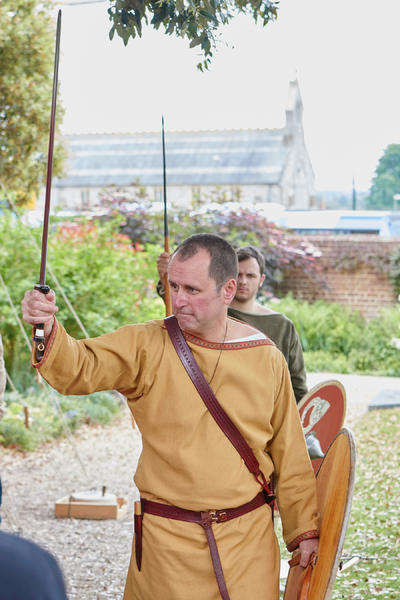
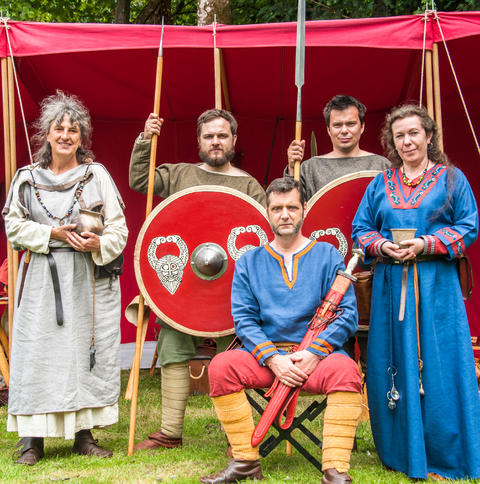
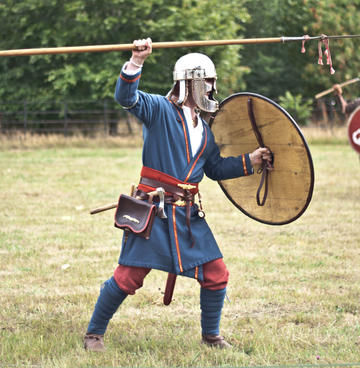
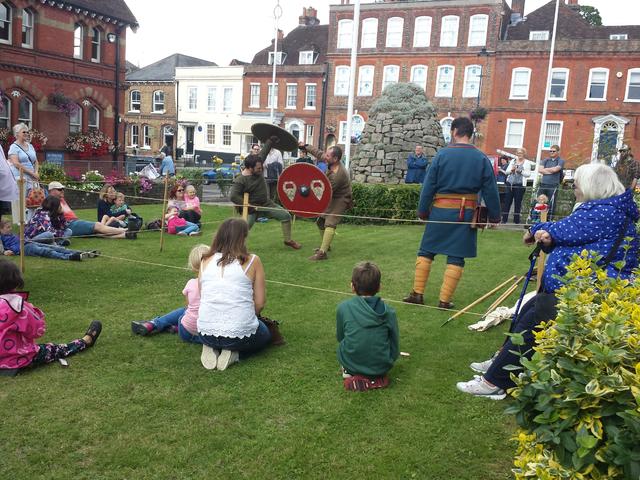
It is this that Weorod was formed to portray.